libbrailleReading by touch

An independent publication about braille and tactile reading. A C library called libbraille was once one of the pieces of software that let Linux drive a braille display. This publication is not that software and has nothing to do with it.

libbraille / Contractions

Position 2 · Contractions

What Unified English Braille Actually Unified

Before UEB, English braille was a loose federation of overlapping codes. The reform took twenty years because unifying contractions meant choosing who would lose.

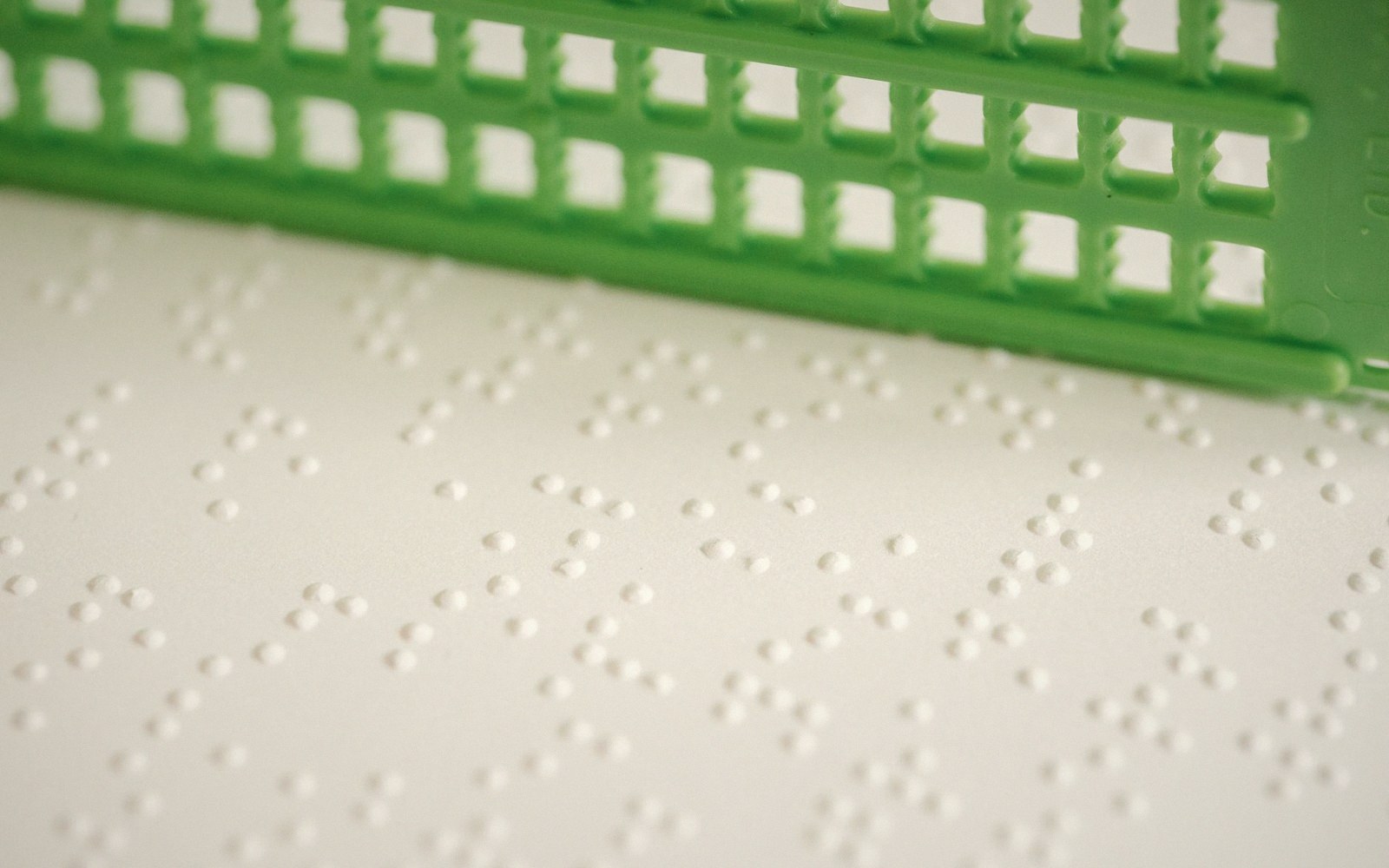
Braille paragraph EBAE UEB side-by-side transcription
01

The Fragmented Inheritance

By the early 1990s, English braille existed in several mutually incompatible dialects. The United States used a code formalised in 1932 and revised incrementally since. The United Kingdom used its own version of that same heritage but had diverged on specifics. Canada, Australia, New Zealand and other Anglophone countries each made further local decisions. A braille document produced in London might contain contraction forms that a reader trained in Chicago would decode differently, or not recognise at all.

The deeper problem was structural. English braille had accumulated its contractions across a century of piecemeal decisions. Some forms dated to Louis Braille's own era; others were added as printing organisations lobbied for particular shortenings. The result was a system with around 250 contractions in its fully contracted form — a figure that varies slightly depending on how you count composition signs versus part-word forms — plus a set of specialist overlays for mathematics, science and music, each of which colonised cells that literary braille already used for something else. Mode-switching was constant, error-prone, and underdocumented. A reader moving between a novel and a chemistry textbook was, in effect, switching between three different coding systems with no reliable on-page signal of which was active.

The International Council on English Braille was formed in 1991 specifically to address this. Its founding members were the national braille authorities of Australia, Canada, New Zealand, the United Kingdom and the United States. The brief was to produce a single, internally consistent code that would serve all of them. What nobody said plainly at the outset, but became obvious quickly, was that unification required subtraction: some contractions that had been in use for decades would have to go.

02

What Was Dropped, and Why

The pre-UEB code — English Braille American Edition, or EBAE, to use its formal name — contained contractions that the unification process judged either redundant, ambiguous, or simply too problematic when the code had to operate across more than literary text. The culls fell into several categories.

The most controversial were the so-called lower contractions: forms that used only the lower four dots of the cell, without engaging dots 1 or 2. Several of these were ambiguous at the boundary between a word and a space. In rapid braille, a lower-cell contraction at the start of a word is easy to misread as a preceding space or punctuation mark. Embossed braille is already susceptible to dot-level ambiguity from paper distortion; forms that remove the visual (or rather tactile) anchor of the upper dots made that problem worse. UEB retained some lower contractions but eliminated those whose benefits in compression were outweighed by the error rate they introduced.

Whole-word contractions were also trimmed. EBAE had single-cell representations for common words including "but," "can," "do," "every," "from," "go," "have," "just," "knowledge," "like," "more," "not," "people," "quite," "rather," "so," "that," "us," "very," "will," "it," "you," and "as" — among others. UEB retained the most frequent of these but dropped or reconfigured forms where the same cell had been pressed into service differently across specialised codes. In some cases, a cell that EBAE used for a literary contraction was also needed by technical contexts to mean something else entirely. UEB's solution was not to find a new cell for one meaning, but to sacrifice the literary contraction and let the cell belong unambiguously to the technical context. This logic — cede the literary form to free up unambiguous space for notation — ran through many of the trickier decisions.

Part-word contractions, which could stand for letter clusters rather than whole words, were subject to a different kind of rationalisation. EBAE allowed contractions in positions that UEB disallows. The critical change was the introduction of what UEB calls the "orthographic syllable" as the unit governing where a contraction may appear. A contraction in UEB may not span a morpheme boundary in ways that would misrepresent pronunciation or word structure. Several EBAE contractions were legal precisely where UEB forbids them. The word "afternoon" in EBAE used a particular sequence of contracted forms that UEB disallows because splitting it differently would misguide a reader about syllabic structure. The practical effect was that a handful of high-frequency words actually became longer in UEB than they were in EBAE — which contributed to the code's controversial reputation among experienced EBAE readers.

03

What Was Retained, and Why It Matters

Despite all the trimming, UEB is not a sparse code. It retains the strong-word contractions for the most common English words and a substantial set of part-word contractions for frequent letter clusters. The logic of retention was frequency-weighted: if a contraction reduced the length of text that appeared thousands of times per braille page across a reading life, it stayed. If it shortened a word that appeared a dozen times, it was vulnerable.

The letter-group contractions for clusters like "ch," "gh," "sh," "th," "wh," "ou," and "st" were retained without modification, because they compress the most common digraphs in English orthography and their cell assignments were not in conflict with mathematical or scientific notation needs. These also happen to be among the contractions that braille learners acquire earliest, so their retention reduced the disruption for existing readers.

The alphabet wordsigns — single-cell forms for words like "but" (b), "can" (c), "do" (d) — were retained in reduced form. UEB kept those where the letter assignment was intuitive and frequency was high. It dropped or restricted those where the assignment was historical rather than logical, or where context-sensitivity had made them a source of errors in automated braille translation.

The deeper retention was structural rather than item-by-item: UEB kept the fundamental architecture of contracted English braille intact. A reader trained in EBAE does not encounter an alien system when reading UEB. The cells look familiar; the reading experience is close. The adjustment is at the edges — specific forms in specific word positions — not in the underlying logic. The reform was a pruning, not a replacement.

04

Why It Took Twenty Years

The International Council on English Braille finalised UEB in 2004, thirteen years after it was formed. Ratification and adoption stretched the process further: Australia adopted UEB in 2005, the UK in 2011, and the United States not until 2016. The process was long for reasons that had nothing to do with technical difficulty.

The technical questions — which contractions to keep, how to handle notation conflicts, what rules should govern contraction application — were answerable, and were answered, by working groups whose documentation runs to hundreds of pages. What was slow was the politics of consensus among organisations that had invested their production pipelines, their teaching materials and their reader communities in existing codes. Every dropped contraction had users who had learned it, publishers who had used it and educators who had taught it. The compromise that emerged — retain enough to keep experienced readers comfortable, cut enough to enable clean integration with technical codes — satisfied neither the conservatives who wanted nothing dropped nor the reformers who wanted a shallower contraction set.

The two-decade timeline also reflects the genuine weight of contractions as a design constraint: braille books are large, paper is expensive and heavy, and compression is not a convenience but a practical necessity. Any proposal that increased the average length of a braille document was met with resistance grounded in real production economics, not mere sentiment. When preliminary analyses suggested that UEB would expand some documents slightly compared to EBAE — because certain high-frequency contractions were dropped or restricted — the pushback from publishers was immediate.

The answer, ultimately, was empirical: independent studies measured the length difference in real texts and found it modest, typically a few percent on extended prose. That figure was acceptable to enough parties to allow ratification to proceed. It is worth noting that the figure was not zero. UEB documents are, on average, marginally longer than equivalent EBAE documents. The cost was judged worth paying for a code that could handle mathematics, science and music without the perpetual mode-switching that had made EBAE-plus-Nemeth-plus-music a source of genuine confusion for readers, transcribers and translation software alike.

What UEB unified, in the end, was less the contraction inventory than the governing logic. Single consistent rules for when any contraction may appear, a cell assignment scheme designed to minimise conflict across literary and technical contexts, and one authoritative code shared across the English-speaking world. The pruning of the contraction list was the price of that logic. Whether the price was correctly set is still debated by working transcribers, but the alternative — continuing to maintain diverging national codes with incompatible edge cases — had its own costs, and they were accumulating.