The Mirror Problem
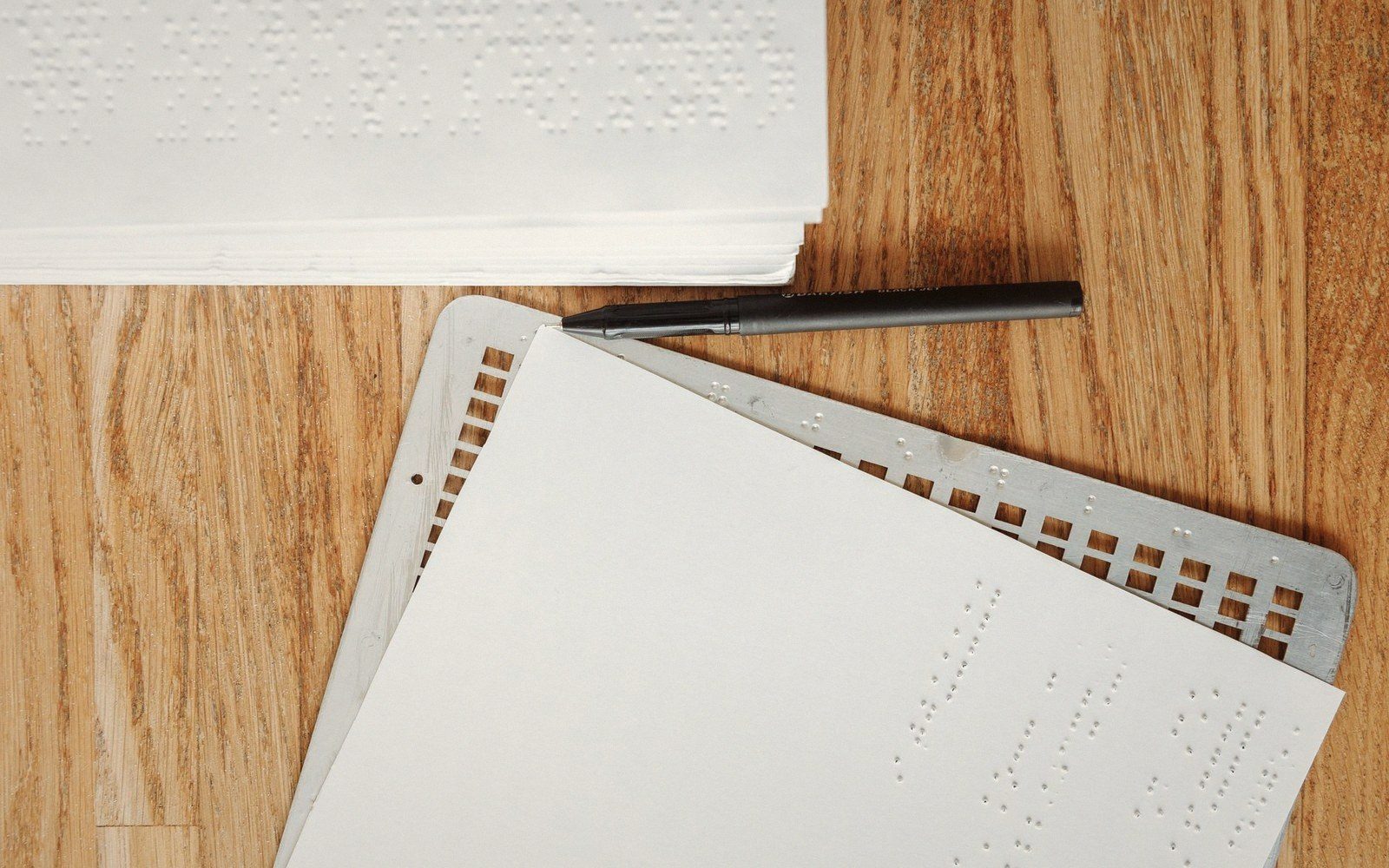
A braille cell raises dots above the surface of the paper. When a stylus punches a dot from above, it pushes the paper downward — creating a depression on the writing side and a bump on the reverse. The reader feels the bumps. The writer works on the opposite face.
That single physical fact forces two reversals simultaneously. First, the writer must indent from the back of the cell: dot 1 is struck where dot 4 sits on the reading face, and dot 4 where dot 1 sits. The standard numbering convention — 1 through 3 down the left column, 4 through 6 down the right — applies to what the reader touches, not to what the writer sees through the slate window. Second, to produce text that reads left to right, the writer must compose right to left across the page, so that when the paper is flipped, the line runs in the correct direction.
Neither reversal is optional. Skip either one and the result is a mirror-image cell that means something else entirely, or nothing at all.