Two Patterns, One Job
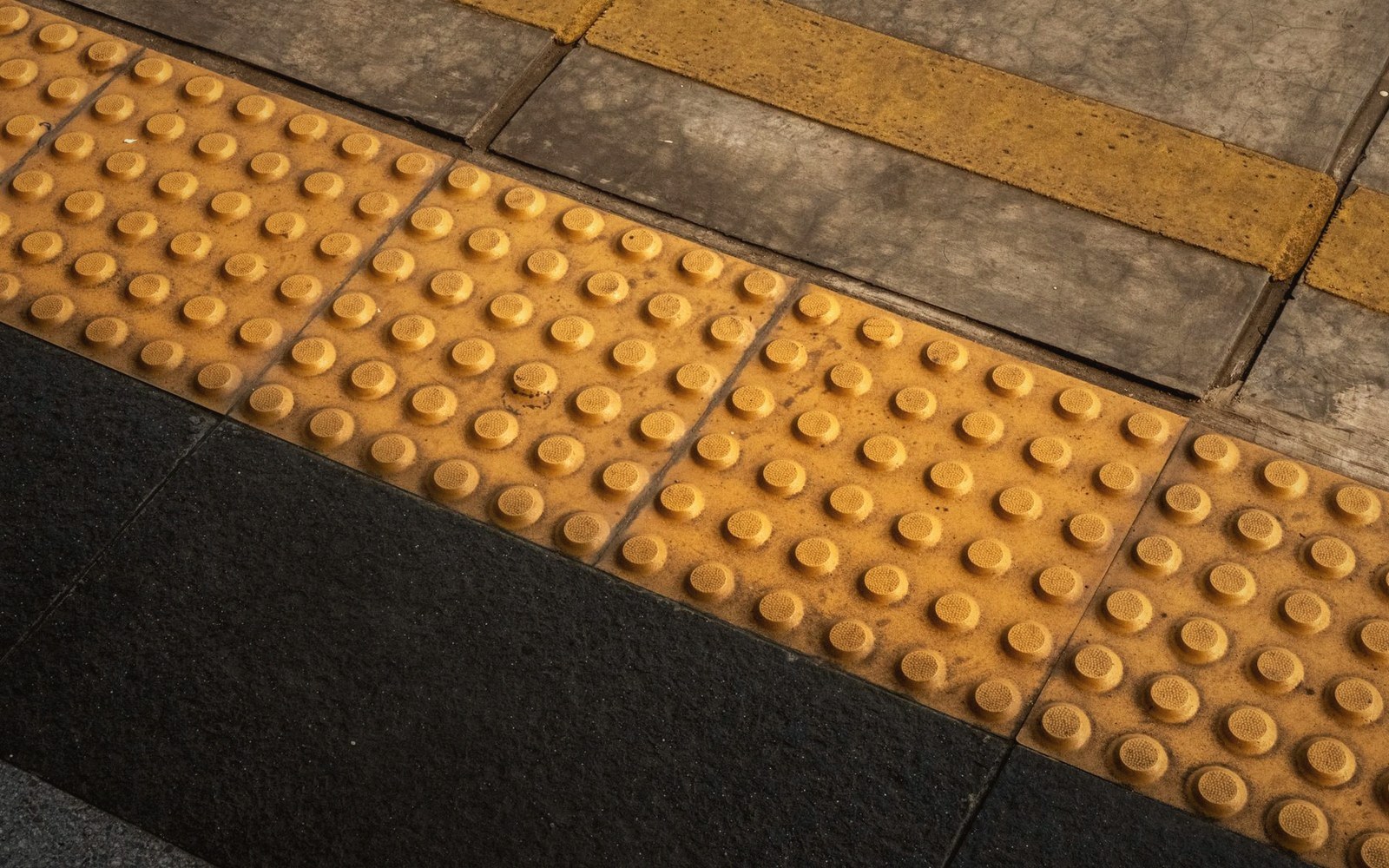
Stand at any rail platform edge in Britain, Japan, Australia, or Germany and you will find a strip of tactile paving underfoot. The surface changes — either a grid of raised domes or a set of parallel bars — and a pedestrian with a cane, or one simply attending to the ground through their soles, receives information without looking. The system works because the two patterns carry distinct meanings: domes (or blisters) signal hazard, bars signal direction. That semantic split is now close to universal. The geometry behind it is not.
Tactile ground surface indicators — TGSIs in the standards literature — divide into two functional families. Hazard indicators use a repeating array of truncated domes, warning that something dangerous lies ahead: a platform edge, a kerb onto moving traffic, the top of a stair flight. Directional indicators use elongated bars or linear ribs running parallel to the direction of travel, guiding a pedestrian along a path through a complex environment — a concourse, a bus interchange, a pedestrian underpass. Both types have been standardised at national and international level. The problem is that "standardised" does not mean "identical."