02
What a display cannot do
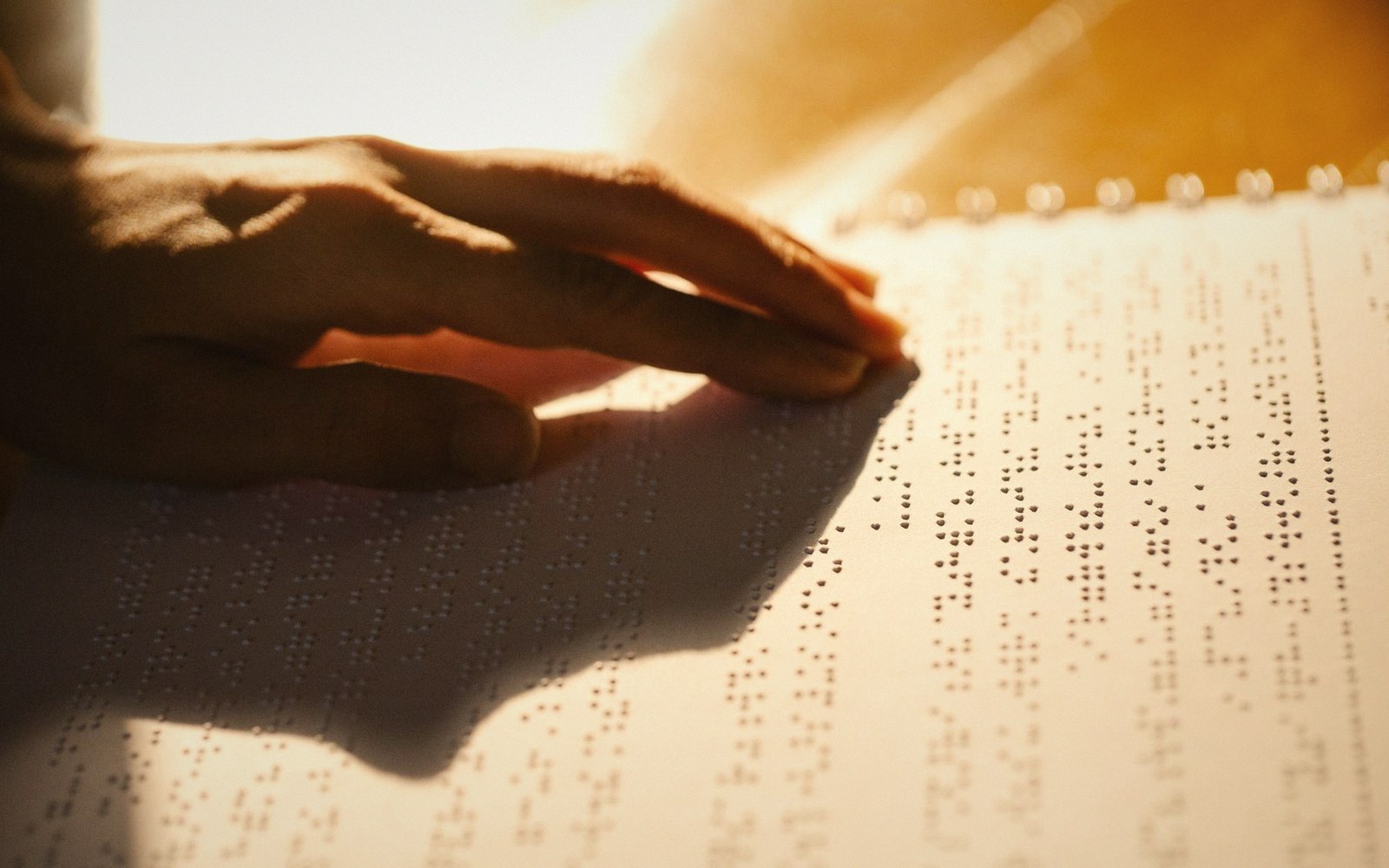
The first constraint is spatial. A standard single-line refreshable display shows between fourteen and forty cells. Even the multi-line displays that exist at the high end of the market — the ones that approximate a braille page — show a fraction of what a physical sheet presents at once. When a reader lifts a page of embossed braille, both hands engage the whole surface simultaneously. The right hand reads forward while the left hand holds position, tracks line breaks, and locates the next line before it is needed. The page is a spatial object; the display is a narrow aperture.
That spatial relationship matters most for content with inherent layout: a music score, a multiplication table, a map legend, a graph. A display serialises everything, converting two-dimensional structure into a one-dimensional stream. Music braille encodes information across simultaneous voices and system breaks that become genuinely harder to parse when forced through a single moving line. A reader working with a physical score can leave one hand on a measure while the other explores bars ahead or behind. A display user cannot.
The second constraint is annotation. Paper can be marked. A braille reader using a slate and stylus — or a labelling machine — can add notes in the margin, underline a passage with a tactile score, flag a page with a clip or a folded corner. Embossed paper accumulates the reader's engagement with it. A display is always clean, always reset, always presenting the current cell and nothing else. There is no equivalent of a dog-eared page or a personal annotation system built into a textbook over a semester.
The third constraint is permanence and trust. A document printed on good interpoint paper and stored correctly will be legible in decades. It does not depend on firmware, battery cycles, proprietary software, or a manufacturer's continued existence. Institutional libraries and archivists have understandable reasons to prefer a medium that does not expire.